For many alums, “design” while at McKinsey meant graphics assistance for PowerPoint slides. But today design means much more, and can be a critical element of advice we provide to clients.
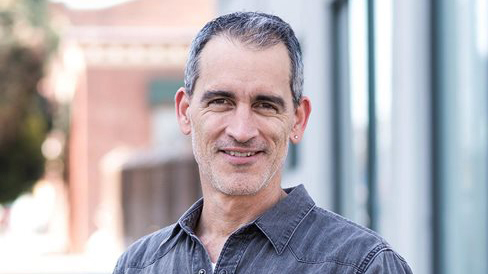
The Firm’s recognition of the increasing business importance of design led to the acquisition of LUNAR, one of Silicon Valley’s oldest design firms, in 2015. Jeff Salazar, VP of Design at LUNAR and a McKinsey Partner, recently spoke with us about how LUNAR and the Firm are working together to bring value to clients.
Why do you think it was important for McKinsey to incorporate designers into its client offerings?
It was an incredibly smart thing to do, because what I think industry has recognized more and more is that good design adds value.
Design in and of itself is a vehicle to help companies grow – understanding who the users of offerings and services are, and identifying the pain points; understanding what the capability of the company is, and a brand’s relationship to those customers. What are the offerings that are going to resonate, and how do you manifest those in the best ways possible?
Instead of only looking at a challenge from a business perspective, design brings an empathy-based understanding of the market. Strengthening the connection between brands and businesses to their users and customers is the core of what motivates and inspires design.
And design doesn’t only apply to consumer products – a user can be someone working with equipment in a lab, someone operating a machine, using mining equipment, or even someone in a Best Buy walking down the aisle looking for a computer. Design users are everyone and everywhere.
How has LUNAR enhanced how McKinsey works with clients?
LUNAR and McKinsey Design can span the range from product/experience strategy through to execution and launch: uncovering deep user insights, understanding key industry trends that affect emerging user expectations and behaviors, doing the design concept work, engineering commercial-ready solutions, and releasing a product to market. This is something McKinsey could never have done in the past.
McKinsey has historically delivered strategy – either identifying growth opportunities or fixing problems so that an organization can perform most efficiently. It hasn’t made the leap from strategy to product experience execution. And this is the beauty of how design fits in, where McKinsey has traditionally left off.
Clients are really intrigued by what we’re doing; engagements with design routinely get high marks, and it’s because the engagement approach and deliverables are different. We need to continue to thoughtfully integrate design into a broad array of studies across sectors, find ways to communicate the impact we are having, and show it in the world so people come to McKinsey for design.

How is your approach similar to – or different from – the traditional Firm approach to problem solving?
If I zoom out for a moment, we’re all trying to create music. The CST model, to me, is like a classical orchestra. Everybody plays a critical and clearly defined role – roles that are tried and true and haven’t evolved much over the last decade or so – and the notes played are very clearly on the page. Design is more like jazz, with just enough of a framework. Jazz does start off with some thought and intention, such as, “What key are we going to play in? Who am I bringing together?”, and design is the same – both are highly experimental in nature. There is a beginning, a middle, an end, but it’s fairly unpredictable, and there are some moments of uncertainty.
That’s an apt metaphor to describe the challenge that we face as far as bringing design in and truly embedding it into helping enhance and elevate the traditional work that McKinsey does and how it engages with clients. Design involves problem-solving more from a discovery standpoint versus a hypothesis-driven standpoint.
There is a new space that exists where you have the traditional problem-solving method and mindset on one side, and the creative, discovery-driven mindset on the other side. You don’t blend the two to get a mud color: The new approach integrates and hybridizes the approaches to get an enhanced version rather than a compromised version of what each does separately. That’s super exciting.
What would you say has been the most impactful engagement you’ve worked on so far? What made it so successful?
We have been working with a large client, dominant in its industry, that’s facing challenges both from big brands and startups. There’s a fundamental question: Where is the growth? How do they retain a level of category dominance, strengthen their position, and broaden their influence and impact?
The (very wise) client DCS understood design enough to recommend bringing us in early on to help them understand this problem, and maybe see how to approach it differently. And it’s not a design-driven company; it’s engineering-driven. He brought us in without much direction, which is a key factor to why it’s working. There was no prescription based on his prior understanding of how a CST engages with a client other than the suggestion that design might be a part of the solution. He trusted that McKinsey acquired the right design firm and the leaders there could understand the opportunity and figure out what to do.
It was clear that because we were understanding the organization and its challenges, it allowed us to then have conversations about design that felt far more relevant than just responding to a director’s or middle manager’s understanding of simply going to the next generation of the product.

How well do you feel LUNAR is integrated with the Firm?
How do we really become part of the Firm’s DNA? It will take a while to make that happen. We have many advocates, but we’re in the early stages of cracking open the potential.
A Partner and AP on a current study have said to me, “You can’t put what you do on a page.” Design doesn’t work like that. You can get people part of the way, but it has to be a felt experience. The AP said to me the other day, “I had no idea that this is what you do and how you do it, and what you deliver.”
Design can be a part of seemingly unrelated concepts, such as procurement or supply chain. When design is embedded in multiple conversations with a client, designers can help gather data points and figure out how to pull them together to create solutions that synthesize them.
The more exposure we have to the context of the challenge a client is facing, the better we can harness, consolidate, and synthesize design into relevant solutions that marry the end-user perspective with the business challenge, whether it’s operational or otherwise.
You had been with LUNAR for a long time before joining up with McKinsey. How has the new partnership changed how you work with clients?
I’ve been in design for 25 years, and at LUNAR for 22 of those years. I love having a problem marinate, but I also have been a part of plenty of projects that never went anywhere because they weren’t relevant in understanding the broader context of what the problem to solve was, what the right work was to do it, and the right conversations to have to support it.
This is a key motivation for why LUNAR joined McKinsey. The company had a body of work spanning about 34 years, and we were well-recognized and well-respected. What were we going to do for the next 30 years? We wanted to build off of that, and not to repeat what we’d already done. This is the time to provide more value to industry. And who is a better partner to join in doing this than McKinsey?
There’s no obvious formula now and that’s really challenging, which is great. It means people have to move beyond the default mode of working. Bring the same training, the same expertise, the same knowledge and intelligence, but also be open to embracing new profiles, new problem-solving methods, new approaches, new ways to build the relationships, and new ways to enhance the experience that McKinsey provides to their clients.
Every so often I’m challenged by a Partner or a DCS to think bigger and bolder. And I love it, I absolutely love it.

