In December 2015, McKinsey announced the acquisition of QuantumBlack, a London-based company that was a pioneer in the use of big data and advanced analytics to improve organizational performance.
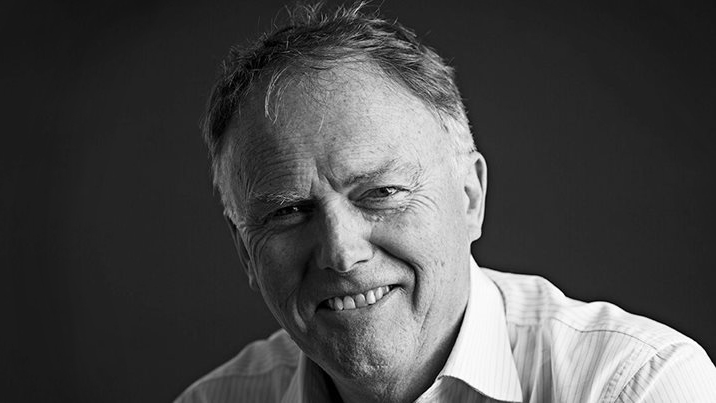
This acquisition is representative of the shift that the Firm has been making in recent years towards more acquisitions and partnerships, and towards growing our data and advanced analytics capabilities. But what is QuantumBlack, and how exactly do they work with the Firm? We spoke with Jeremy Palmer, QuantumBlack’s CEO, to find out.
Can you please give us a quick overview on what QuantumBlack does? A lot of us might vaguely know that it has something to do with analytics, but can you help us understand what you do exactly and how you work with clients?
We describe what we do as helping companies use data to make transformative and sustainable performance improvements.
What does that mean in practice? Well, I think that we all know by now that data is a subject which is all over the place, and very many of our clients – very many companies and organizations over the world – are faced with the challenge of knowing that data is an asset which they could use to improve their performance.
They also know that many of their competitors are doing this.

But they don’t know how, exactly, to equip themselves to build the kind of organization which is fit for progress for the future – whereby they can actually look at all of the opportunities that exist in their data, and combine it with data from external sources, and then use analytics to build an organization which is continuously learning and improving, and fulfilling its potential. This is what we help clients do.
How did QuantumBlack come to be acquired by the Firm?
When we started to work with McKinsey several years ago, we were a very early-stage startup, and we didn't have very many people. But a couple of enterprising McKinsey Partners found out about us, and invited us to think about some problems together. And we ended up working on a very significant client situation together.
We then got to know each other better, and the more we got to know each other, the more sense it seemed to make [to go to the Firm] when it was time for QuantumBlack to raise some more money as we grew. We entered into discussions and we realized that the best future for all of us was to actually team up completely with McKinsey, and we completed that process nearly two years ago now.
Do you work with clients on a standalone basis, or as a part of other McKinsey engagements?
Nearly always with teams now, composed of McKinsey and QuantumBlack colleagues working together.
The deep domain knowledge that different McKinsey colleagues have in different industry sectors, their relationships with very senior-level clients, and their experience and credibility in terms of actually landing organizational change – these things mesh in very well with our deep interdisciplinary knowledge of accessing data, working with data, and applying analytics to that data. It’s a very complementary relationship, and that's why we nearly always work together.
What has been the best part about becoming a part of McKinsey, and what's been the biggest challenge?
The best part is the fact that we have the opportunity to have impact with our work in so many different ways, in so many different industries and sectors. We hoped for that, but the scale of the opportunity is even greater than we thought. The challenge is to understand how the Firm works, and then to prioritize all the opportunities. It's two sides of the same coin.
What’s the most impactful engagement you’ve worked on so far?
We prefer long-term client relationships, where we're working on helping the client transform over a period of time. So in that context, I would say the biggest impact has been with one of our longest-standing client relationships – in fact, it predates our acquisition by McKinsey – with a major global pharma company. We're working on a whole range of opportunities to help them improve how quickly they can get new drugs to patients and to market.
McKinsey has worked with this client as well, and one of the reasons it has been so successful is that we've managed to build an integrated team looking to help the client in many different ways. The more we work together with different CSTs and clients, the more people understand our ways of working, and the quicker we get to impact. Although our ways of working may seem very different – they're not the traditional EM+2 – we have the same goals and the same values, so the more we work together, the smoother it becomes.
QuantumBlack is a very cool name. Is there a significance to it? And how does that name relate to the work that you do?
We're proud of the name, and it's fun. There are a few different things going on in there. There's a little bit of a scientific reference. There's a reference to small measures, and we're a big believer in not promising silver bullets, but incremental improvements. There's a little bit of James Bond, too. We like a little bit of mystery. It's a combination of a number of different things, but it's fun, and it always gets the conversation going, and it's really helpful. So, yeah, we love it, I must say.
We know you've only been part of the Firm for two years, but if you were speaking to someone who left the firm, say, 15 years ago, how would you describe how McKinsey has changed?
Two things, at a very high level. The first thing is, I think people are really starting to understand that the future work with clients isn't always going to be about brilliant generalists. If we're going to meet the challenges that clients face, we need to be able to have different types of specialists working together in interdisciplinary teams, in models which may vary from client to client. I think that's probably the biggest change, which I think is an ongoing transition. The other thing is, I think we may be in sight of a world where we don't have to do everything with enormous PowerPoint decks.
Who inspires you?
That’s easy. Bruce Springsteen, because of his stamina, his endless energy and creativity, and his authenticity. I really love the way he just connects with his audiences, and reflects his background with such energy and truth, and continuing variety.
What’s the last book you read?
“A Long Long Way,” by Sebastian Barry.
What is the one thing you never leave the house without?
My Bose wireless headphones are part of my life. And not just on McKinsey conference calls, but also for listening to Bruce Springsteen.
What is the funniest thing to happen to you recently?
My children would say it’s the moment when a man dressed as a banana streaked past me when I was running the London Marathon. To be overtaken by a piece of fruit was quite an achievement.
Final, big, important question. Harry Potter or Lord of the Rings?
I can't believe you even have to ask that question. Lord of the Rings, every time. Because Bilbo Baggins is just cooler than Harry Potter, for a start.
You may spark a big debate with that answer.
Give me Gandalf over Dumbledore any day.